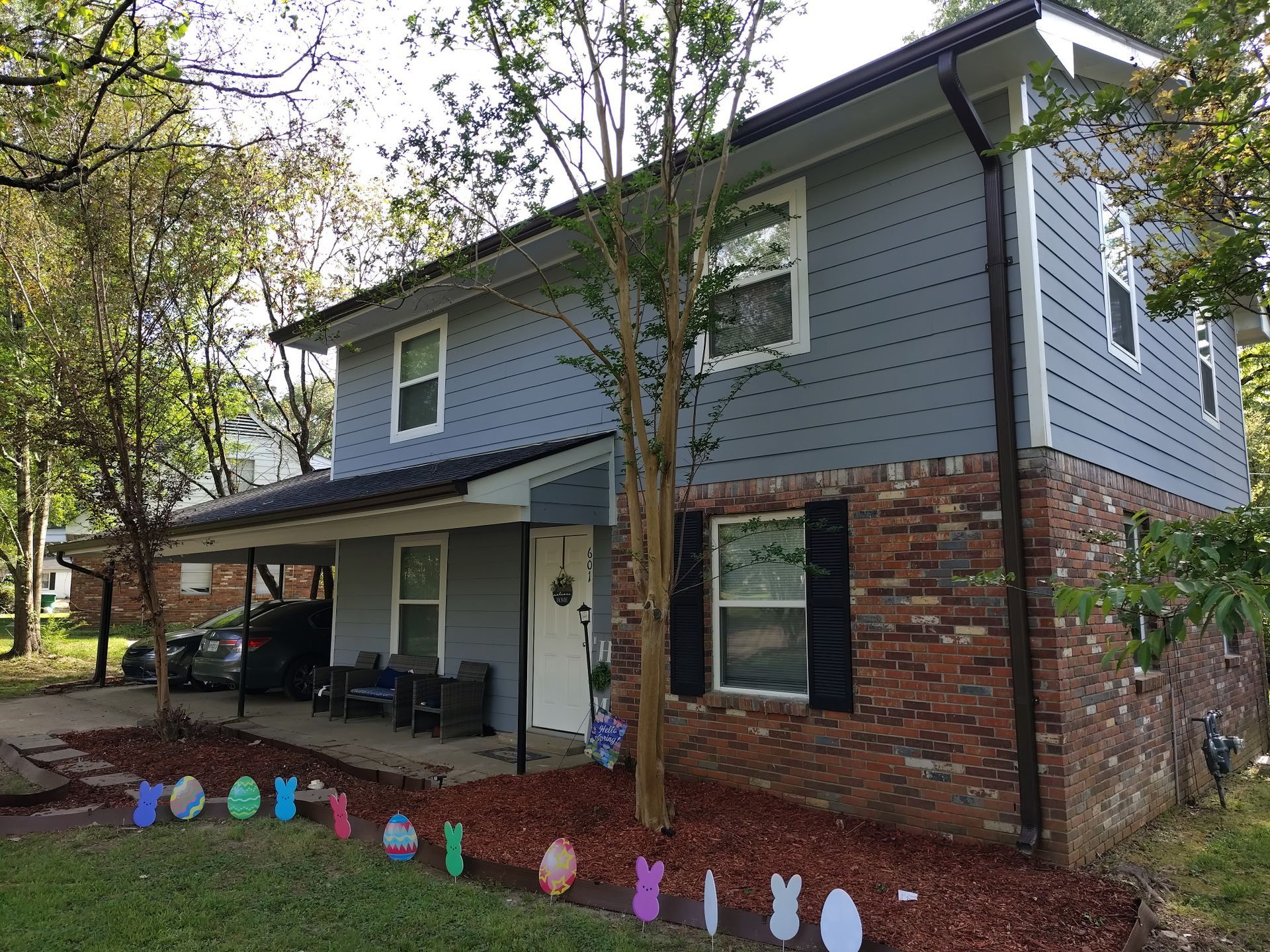

Ankle Roofing
Reliable Coverage Where Rooflines Meet Walls
Ankle Roofing in Byram for properties with transition roofline sections requiring consistent protection and durable material application
Roofline transitions—where a lower roof section meets a wall, changes pitch, or terminates at a structural boundary—are among the most failure-prone areas on any residential or commercial property. A-1 Roofing & Guttering provides professional ankle roofing services in Byram specifically designed to address those transition zones with correctly specified materials and installation sequences that maintain weathertight performance over time. Property owners dealing with leaks that originate not from the main roof field but from the edges and meeting points of roofline sections are the primary candidates for this service.
What makes ankle roofing distinct from standard field roofing is the complexity of the flashing and layering work required at the points where roofing material meets vertical surfaces, changes slope, or terminates at a structural element. In the Byram area, where seasonal rainfall is heavy and temperature swings between summer and winter cause repeated expansion and contraction of roofing materials, those transition zones are under constant mechanical stress. Flashing must be integrated into the roofing system in a way that accommodates that movement rather than fighting it—counter-flashing, step flashing, and saddle flashing each serve different functions at different transition types, and substituting one for another is a common shortcut that produces predictable failure.
Schedule an evaluation of your roofline transition areas to identify which sections show separation, lifted flashing, or material gaps that require targeted attention.
What You Notice Once Transition Roofing Is Finished
Ankle roofing work involves a precise sequence: existing flashing and transition materials are removed and the substrate beneath is inspected for any deterioration caused by water that has already infiltrated the assembly. New flashing is then installed in the correct order relative to the surrounding roofing material—flashing that is applied over shingles rather than integrated beneath them may appear sealed initially but will allow water to migrate under the course above during wind-driven rain events, which is a failure pattern that shows up months after the original work was completed.
Once ankle roofing work is correctly finished, the observable results are specific: no visible gaps where roofing material meets wall surfaces, flashing that lies flat against both the roof plane and the vertical surface without lifting at corners, and interior walls or ceilings adjacent to the transition zone that remain dry through subsequent rain events. A-1 Roofing & Guttering focuses on those termination details because they are what separate a durable installation from one that requires repeated service.
The scope of ankle roofing work varies depending on the length of the transition zone, how many direction changes the roofline makes, and what the adjacent wall cladding material is—masonry, siding, and stucco each require different flashing integration approaches that affect both material selection and installation time..